Portfolio Pro Tips
Whether this is your first year of home education or you are a seasoned homeschool mom, the fun part -- the part you’ve been dreaming of and planning for has begun --- homeschooling your precious kiddos! Hooray! There is no better time than the beginning of the school year to start planning for your child’s end of the year portfolio assessment!
There are two types of record keeping that the state of Florida requires of homeschool families. The first is the record keeping that you do as the teacher. The second type is your child’s portfolio of work. I’ll address each of these types of records in turn. Let’s start with the teaching records that parents are required to keep.
In the state of Florida, you, as the parent, are required to keep a detailed log of your child’s educational activities. This can take the form of a monthly planner/calendar where you jot down lessons completed and curriculum used or a journal (paper or digital) where you keep a narrative record of your teaching methods, curriculums used, and lessons completed. This record should also include documentation of educational field trips, extracurricular activities (things like sports, music, and theater), and classes taken outside of your home (think STEM classes and cooperative learning and the like). As you teach, you are also required to record any reading material used, as it is used. Simply record the title of the book on the date it was used. This includes textbooks that you or your child may be reading from as well as books your child has been assigned to read as part of the curriculum. In addition, you should keep a list of books, arranged by date read and title, that your child is reading for pleasure. You will notice that I have not mentioned keeping track of your child’s attendance. The state of Florida does not require that you keep record of each day’s school attendance, but then, keeping a record of your daily activities will show when and how your child was engaged in the learning process.
Let’s turn now to your child’s portfolio of work—what it should contain and suggestions for keeping all of that information organized!
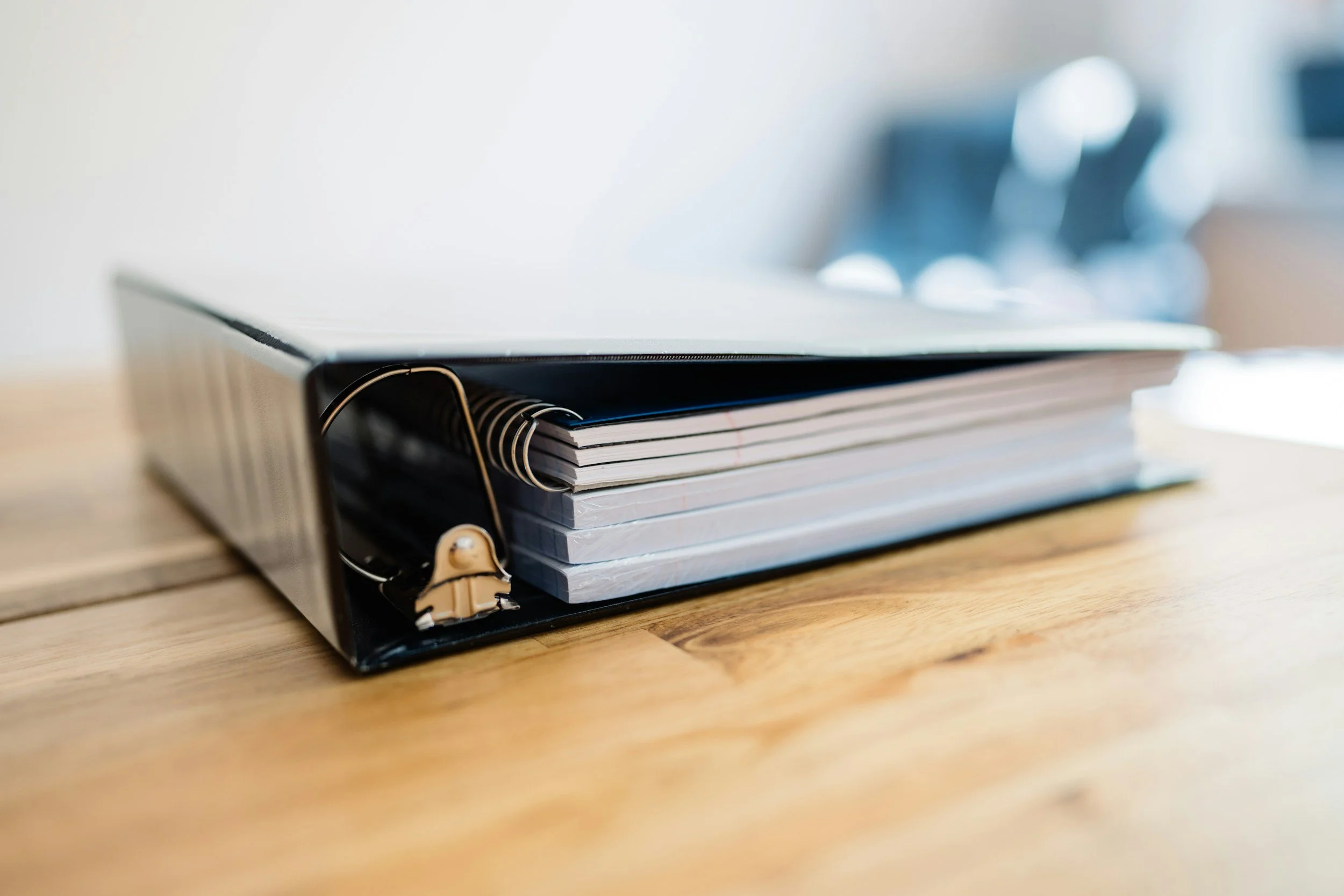
The second type of record keeping required of you by the state of Florida is your child’s portfolio. A portfolio is simply a collection of work samples the spans the entirety of the school year. Some parents take a very traditional approach and use a three-ring binder with dividers for each subject studied. It’s a solid approach that I see all the time as an evaluator. If you choose this approach, don’t skimp, get the three-inch binder with dividers for each subject area! Get in the habit of asking your child to help you select a few pieces of their work each week that he/she is proud of and excited to include in the portfolio. Three-hole-punch each sample and place it, by order of completion date, behind the appropriate subject divider. Keep in mind that you may need to print out photos you’ve take as documentation or make note of audio files stored. Your evaluator will thank you!
Alternatively, some parents find that storing some or all of their child’s records in a series of folders on their computer works better. To use this approach, simply create a digital file folder on your computer for each subject your child is studying. If your child is young or loves hands-on learning, a digital portfolio may make all your portfolio building dreams come true! There, you can store video clips of sporting events, plays, or debates. You can store audio files of speeches or music recitals. You can store pictures of completed projects or field trips taken. You can scan your child’s artwork, letters to friends and family, and written, subject area work samples. The sky is the limit! Remember to keep each folder organized by date, because your evaluator will want to see samples that span the course of the entire school year in order to gauge your child’s academic growth over time. Please keep in mind that if your evaluator meets with you virtually, your digital record keeping efforts could earn you a BIG GOLD STAR! With digital files, it is possible to transmit your child’s work samples to your evaluator prior to your child’s interview.
Whatever method you choose to keep your records and your child’s portfolio samples, make sure that you keep them safe and ready for inspection for two years after they are compiled. More importantly, make sure that your records and your child’s work samples communicate the journey that you and your child made during the course of the school year. It will serve you well during your child’s annual homeschool portfolio evaluation and it will serve as a sweet reminder of all the days you spent together learning subject matter and living life together!